
 |
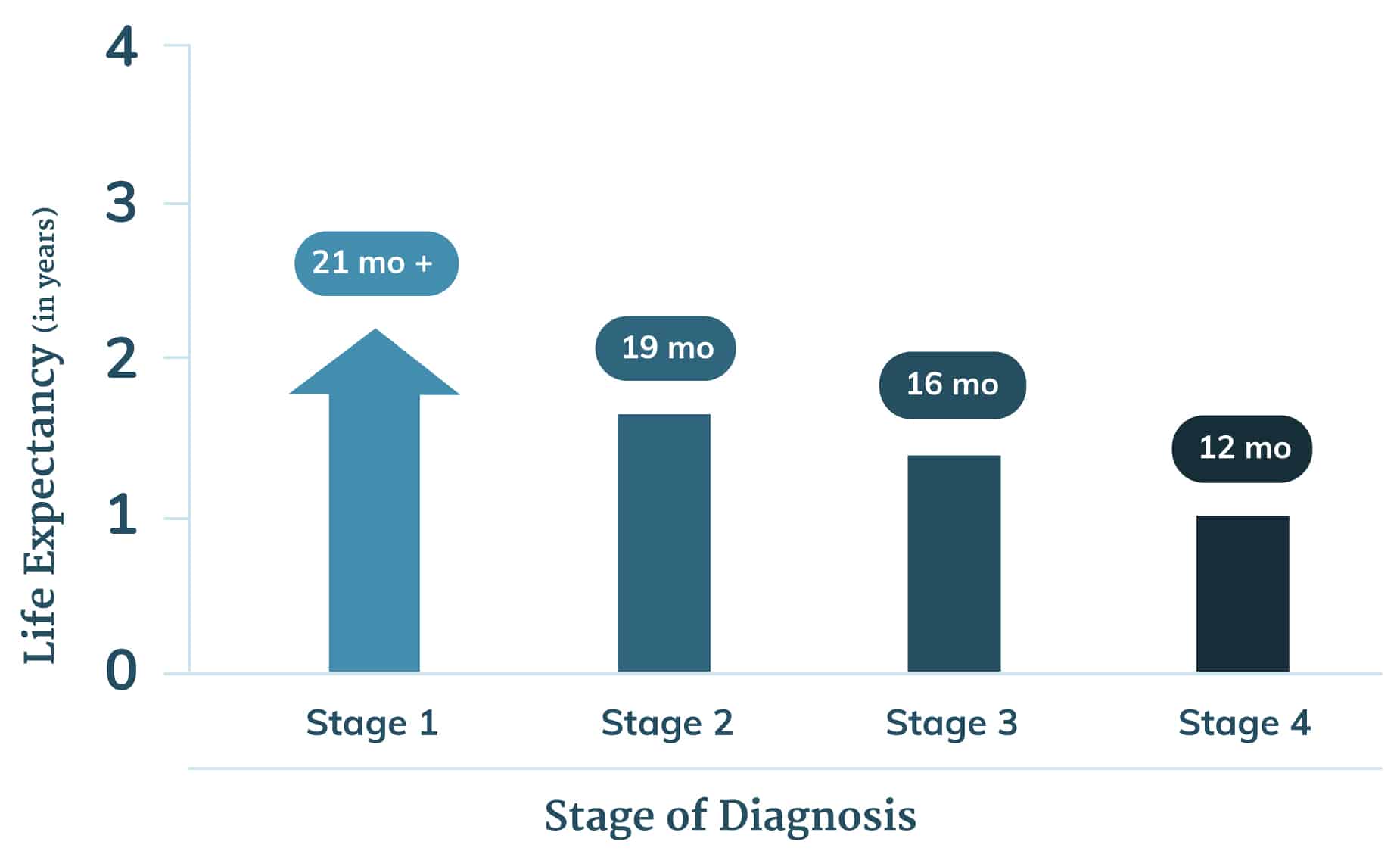
| Mesothelioma Life Expectancy By Stage |
The average life expectancy of mesothelioma patients is 12 to 21 months. A patient's lifespan depends on several factors, including age, stage of disease and overall health. About 40% of patients live beyond one year, and 9% live more than five years.
Malignant mesothelioma is an aggressive form of cancer with symptoms that usually do not appear until the advanced stages. The life expectancy of mesothelioma patients is generally short, especially without treatment, and varies considerably from patient to patient depending on a number of individual factors and circumstances. Long-term survival is extremely rare, with less than 10% of patients living beyond five years. Early detection and quality of health care are the most important factors in improving one's prognosis.
Factors affecting life expectancy
The life expectancy of a mesothelioma patient is difficult to determine because it depends on a variety of factors.Stage
 Early diagnosis of mesothelioma can significantly improve life expectancy. When diagnosed at an early stage (stage 1 or stage 2), there is little or no spread, and treatments are likely to be more effective. However, in stages 3 and 4, mesothelioma has spread to the lymph nodes and distant organs, making treatment more difficult.
Location

Location is another issue that powerfully influences expectation of life. Testicular mesothelioma is very rare but has the greatest potential for healing, with a 5-year survival rate of almost 50% of the other types of mesothelioma, peritoneal mesothelioma generally has the best prognosis with an average survival of one year, while malignant pleural mesothelioma patients typically survive 6 - 12 months.
Pericardial mesothelioma has the smallest amount favourable life expectancy and is commonly diagnosed posthumously, although detection and life expectancy improve due to the development of more effective diagnostic tools and treatments.
Cell type

Mesothelioma can be categorized into three different cell types: epithelioid, sarcomatoid and biphasic (a mixture of epithelioid and sarcomatoid cells).
Typically, those with epithelioid mesothelioma have a considerably longer lifetime than those with sarcomatoid mesothelioma, due to slower metastasis of cancer cells and better receptiveness to treatment. Those with biphasic mesothelioma have a varied lifetime depending on which cell type is powerful.
 |
Life Expectancy by Mesothelioma Cell Type
In general, older patients with mesothelioma have a shorter life expectancy, in part because they are in poorer health and the disease is likely to be at a later stage, but this may also be due to the fact that fewer patients are more older people are offered treatment for their Mesothelioma. One study showed that people diagnosed with pleural mesothelioma before the age of 65 lived almost four months longer than those diagnosed at age 65, and more than eight months older than those diagnosed at age 75 or older.
Patient age, sex and overall healthIn general, women diagnosed with mesothelioma live about 5.5 months longer than men with mesothelioma, and there are more cases diagnosed in men than women. The gender difference is likely due to the fact that men work in higher-risk occupations for asbestos at the peak of its use. Overall health can also greatly affect life expectancy for men, women and cancer patients of all ages.Those who are healthy are more likely to resist aggressive treatments and live longer, while those with poor health or existing conditions have fewer treatment options available and face an expectation of shorter life. Those who are healthy are more likely to abide combative treatments and live longer, while those with poor health conditions have fewer treatment options available and face an expectation of shorter life. Other factors affecting the life expectancy of mesothelioma
Many other factors can be included in determining a patient's life expectancy. However, the extent to which these factors affect life expectancy can vary considerably from person to person. Factors that could have a negative impact include:
Life expectancy and treatment of mesothelioma
Patients diagnosed with early-stage mesothelioma may be able to undergo aggressive treatments, such as surgical removal of the tumor combined with chemotherapy and radiotherapy. Mesothelioma surgery is an extensive procedure, so the patient must be healthy. For elderly patients or those in the final stages of diagnosis, surgery may not be a viable option. In the development of a treatment program, the mesothelioma specialist will assess the patient's health and ability to undergo such treatments. If possible, aggressive treatments can extend life expectancy and improve long-term survival.
The life expectancy of mesothelioma without treatment
Patients may decide not to undergo treatment for their mesothelioma if the cancer is very advanced and causes severe symptoms, if the treatment is too difficult financially or for other personal reasons. Refusing treatment complicates the question of how long do you live after being diagnosed with mesothelioma. Studies suggest that on average, malignant mesothelioma patients who do not undergo treatment typically live just over six months. For those who have been diagnosed at an early stage, survival can last more than a year. However, as with treated cases, survival can vary considerably depending on staging and cell type, location, patient characteristics and other factors.
|
Improving life expectancy
A diagnosis of mesothelioma is difficult, but many people have lived longer taking active steps to improve their health.Increase activity level and fitness
"Performance status" is a technical term that refers to a patient's level of activity and overall fitness. Almost all studies on performance status in mesothelioma patients show a significant effect on survival.The more active and fit you are, the more likely your body will be to resist and recover from aggressive cancer treatments.
Improve your nutrition
Cancer patients who are better fed have longer survival. Eating well helps your body recover from aggressive treatments and maintain good immune function.You may have heard or read about diets for mesothelioma patients. If you want to know more about these diets, ask your doctor for a referral to see a cancer dietitian.
In general, an appropriate mesothelioma diet and good nutrition will provide plenty of protein to support recovery and enough calories to prevent weight loss.
Consider complementary medicine
Complementary medicine refers to other approaches used in combination with conventional cancer treatment. This strategy is also called integrative medicine or integrative oncology. For example, acupuncture, meditation, herbal medicine and yoga. These therapies can reduce stress and pain and improve quality of life.You should always consult your doctor before starting any integrative therapy to avoid drug interactions and the negative consequences of treatment.

No comments:
Post a Comment
Please don't enter any spam link in the comment box.